
The Mission Beyond the Arctic Circle
In December 1855, the Praefectura Apostolica Poli Arctici was established, commonly known as the Nordpolmisjonen (North Pole Mission). Its task was to carry out Catholic missions in the regions beyond the Arctic Circle in the northern parts of Norway and Sweden, on Iceland, Greenland, the Faroe Islands, Shetland, Orkney, the Kola Peninsula, in Caithness in Scotland, and in the Arctic part of North America, from Baffin Bay to Melville Island. The first prefect of the mission, from 1855 to 1861, was Paul Marie Etienne de Djunkovskij, who came from Russia.
Alta was chosen as the base for the mission — a town located in the western part of Finnmark county. (Alta is today also the name of the municipality, of which the town is the centre.) In 1856, a chapel and a school for boys were established here at the Altagård farm, which operated for over 20 years.
In 1869, the Vatican dissolved the North Pole Mission, concluding that the Church in this area should be organised differently.
The last Catholic missionaries in Alta concluded their work in 1898 and moved to other regions. Contributing factors included illness, epidemics, poverty, and famine among the local population, many of whom were forced to emigrate to North America. The priests had to close Altagården, which housed a school for children and youth and served as a base for their activities in the northernmost part of Norway. However, the churches founded during the 14 years of the mission's existence (among them Tromsø in 1859), together with active evangelisation work, bore fruit and ensured that Catholicism continued to develop in this part of Norway. In 1880, the Elisabeth Sisters arrived in Hammerfest, 140 km from Alta, and began their service in Northern Norway.
In the Far North, by the Alta Fjord...
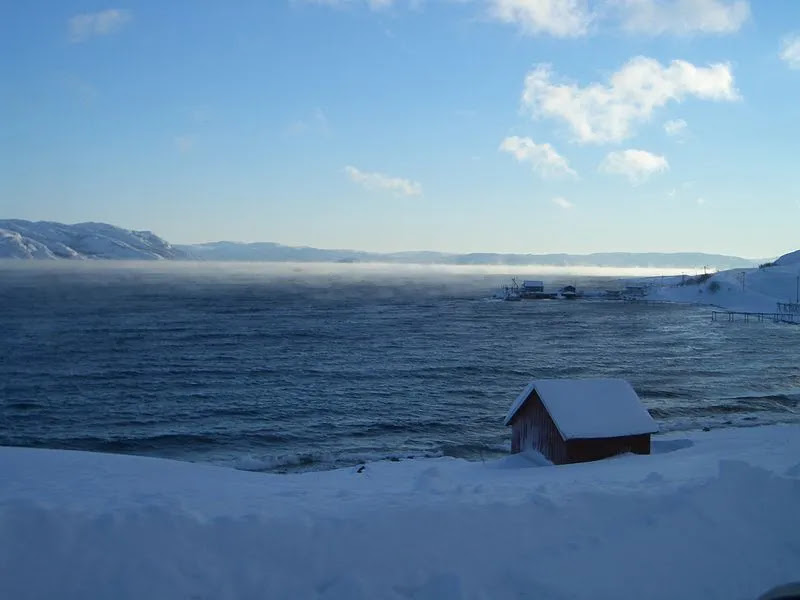
The Church by the Alta Fjord
Alta has grown to become the largest town in Finnmark, with over 20,000 inhabitants today. As the population grew, so did the number of Catholics. The Diocese of Tromsø decided to build a church on a site next to the church property. The location is close to the airport, east of Alta's new town centre.
In the year 2000, the Church purchased a residential building located next to the cemetery. The chapel was furnished, and the parish priest at the time, Fr. Wojciech Egiert — now chaplain — cleared and fenced the area of the church property.
The Diocese also took over the neighbouring property next to the church, which will provide sufficient space for the parish hall. The building requires renovation, which will be carried out in due time. It is encouraging that these conditions provide the opportunity to create what will likely become the most important Catholic centre in Western Finnmark.
The church was designed by the Polish architect Paweł Władysław Kowalski, and the architectural firm Haldde arkitekter AS from Alta oversees the realisation of the project.
Bishop Berislav Grgić blessed the new church site on 25 June 2017. Chaplain Fr. Wojciech Egiert, two Elisabeth Sisters from Hammerfest, and members of the faithful from the Alta area also took part in this ceremony.
Our New Church
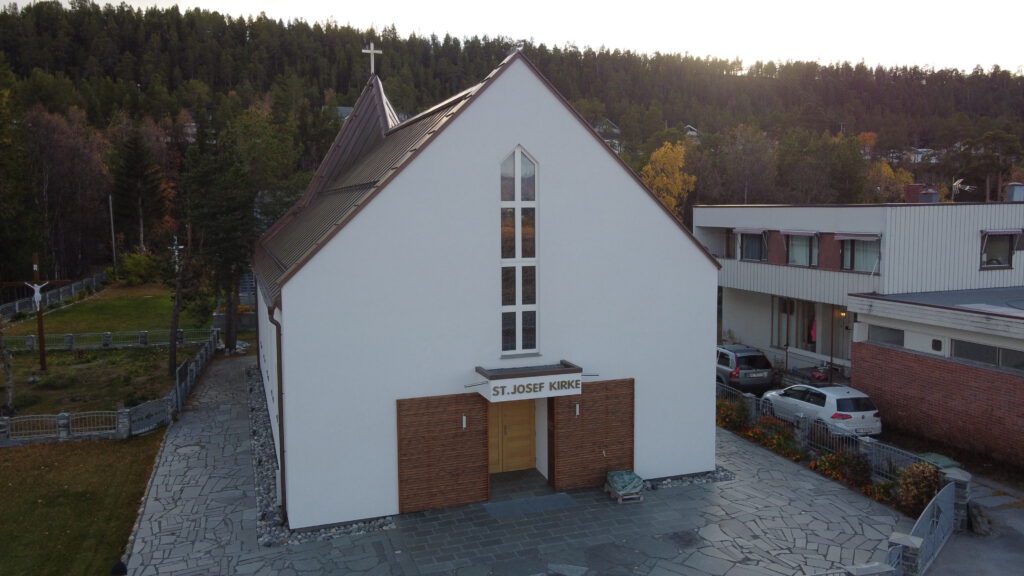
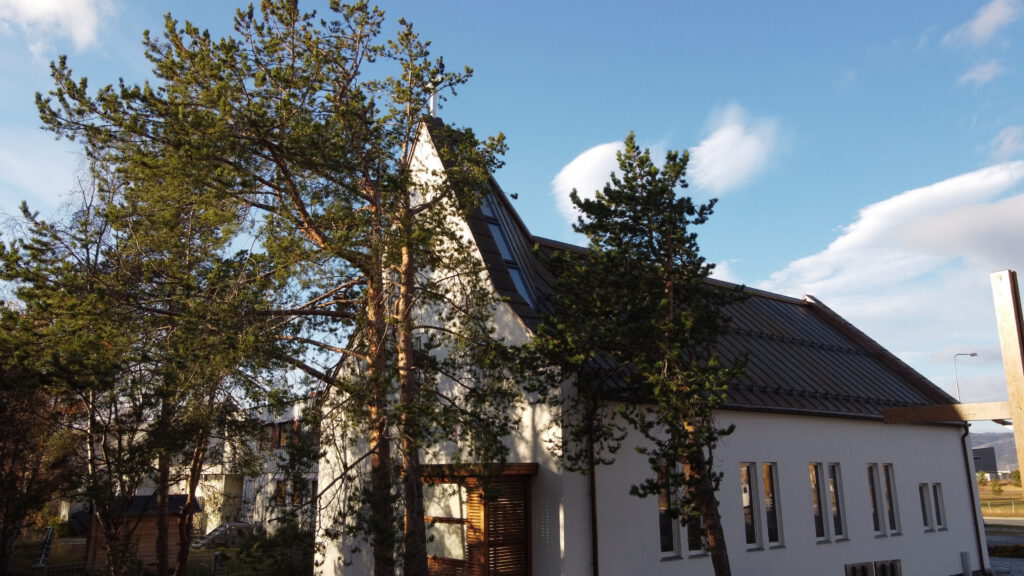
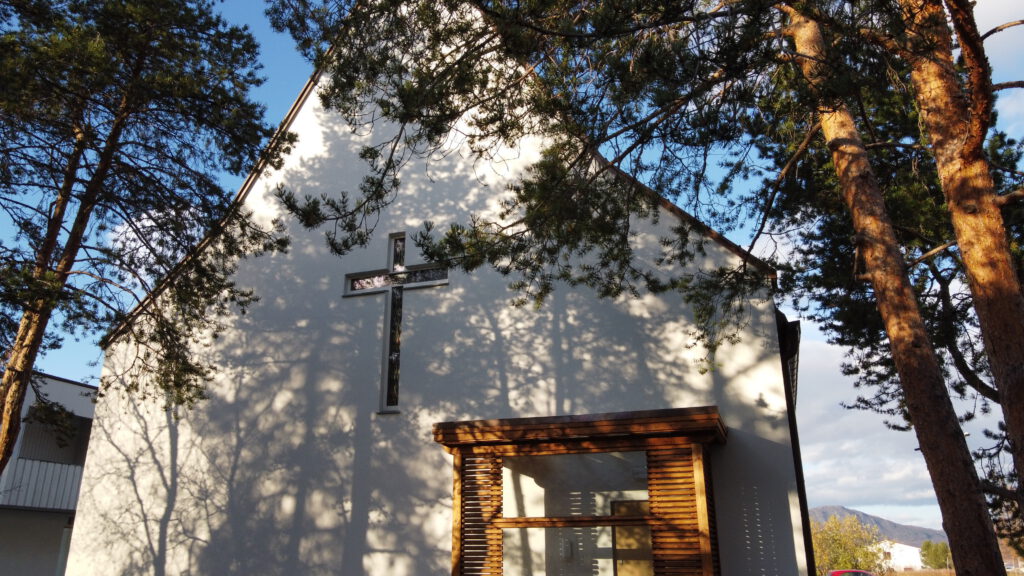
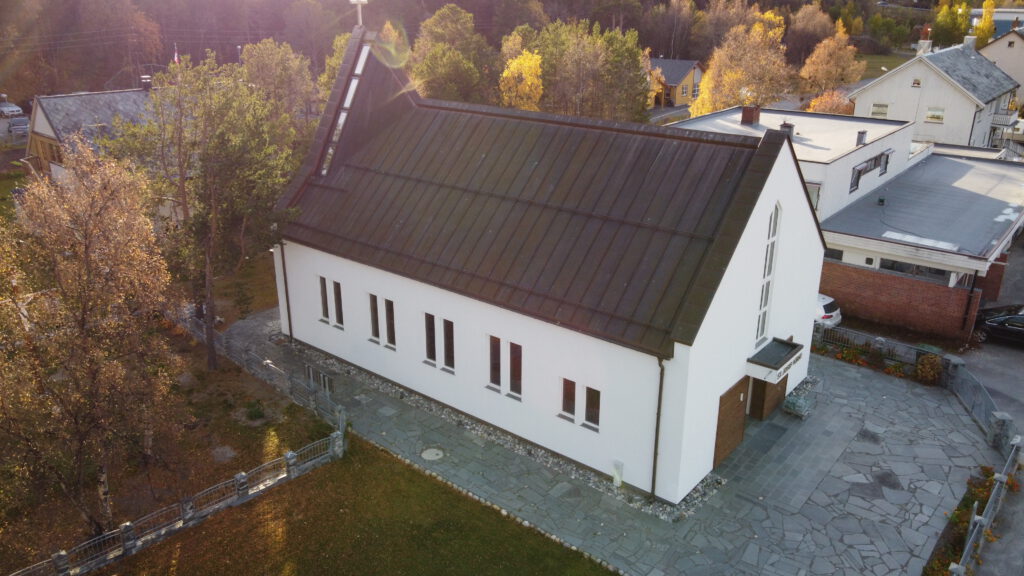
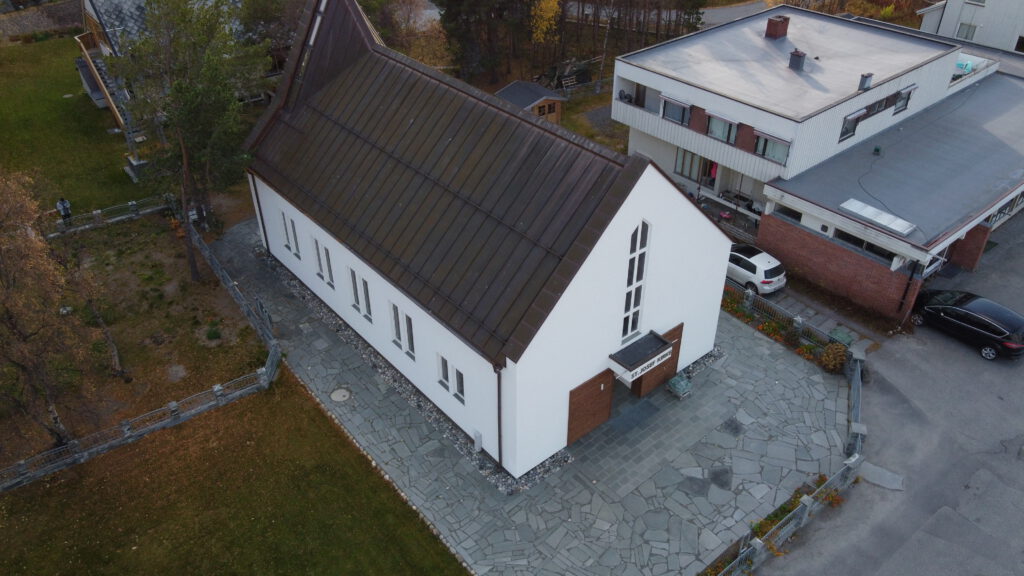
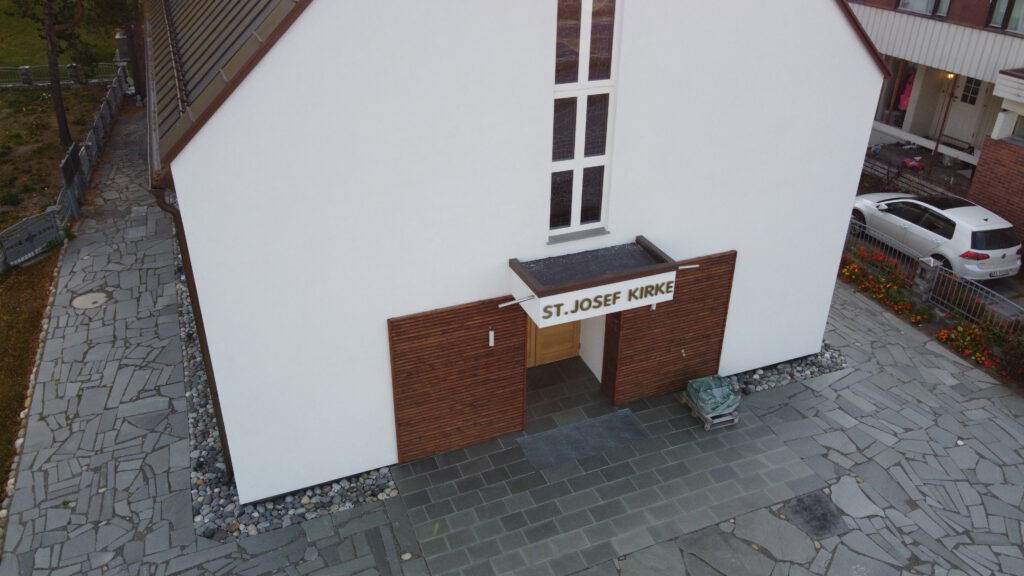
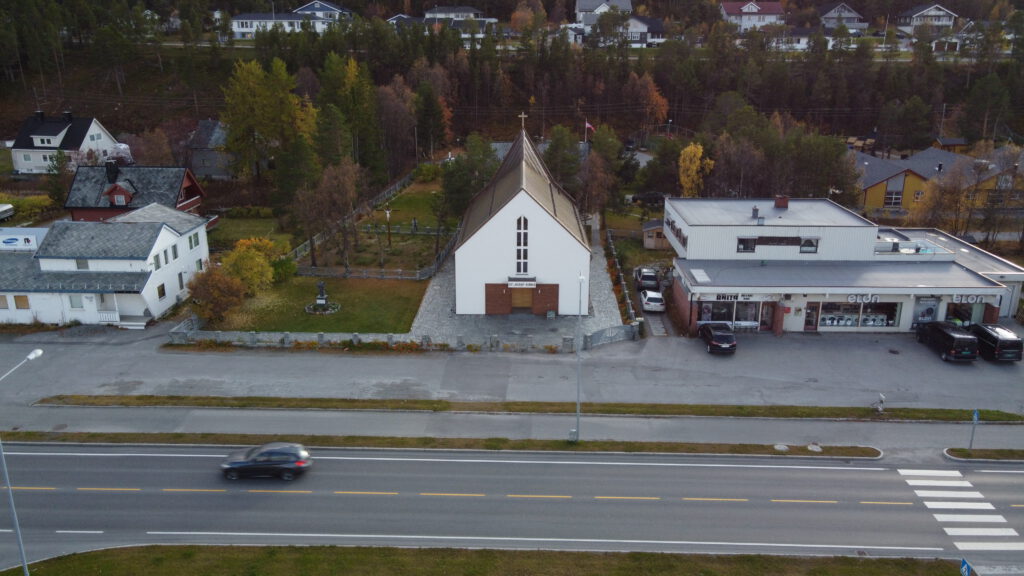
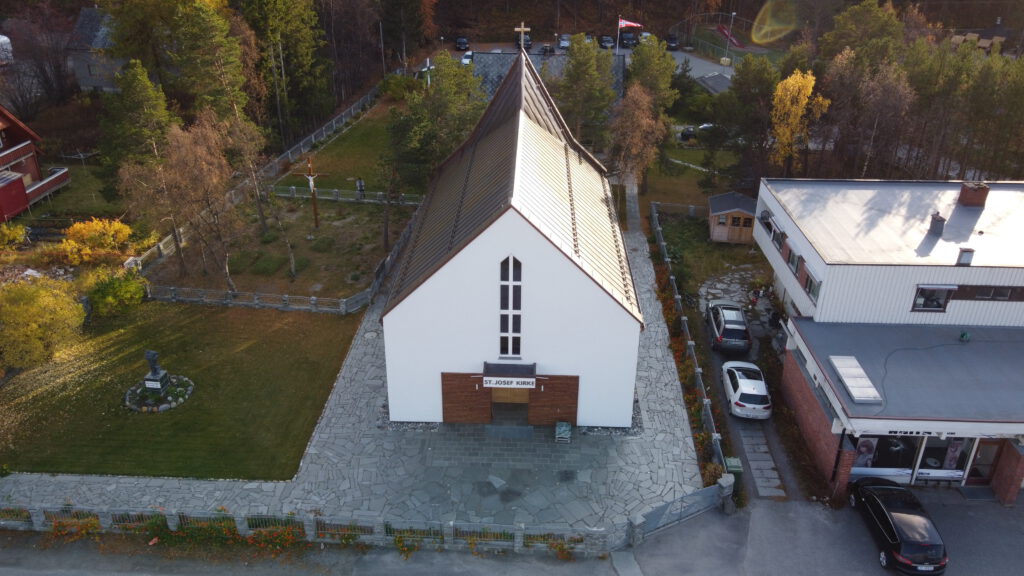
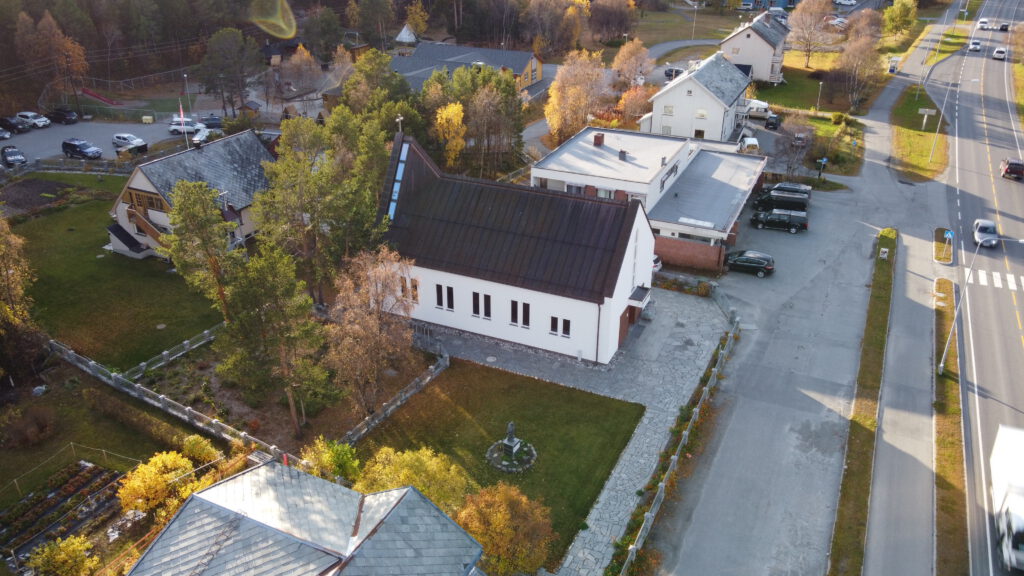
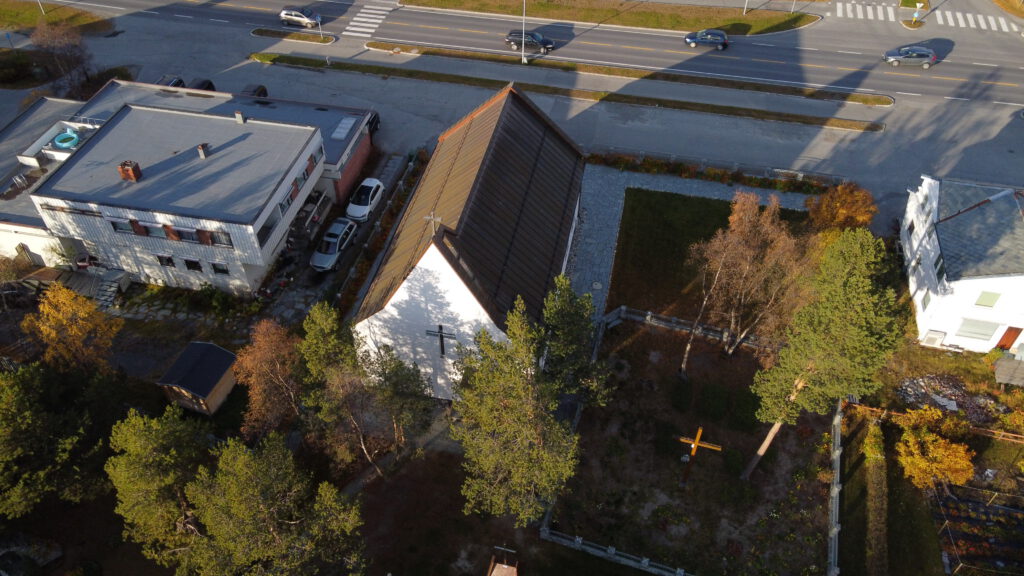
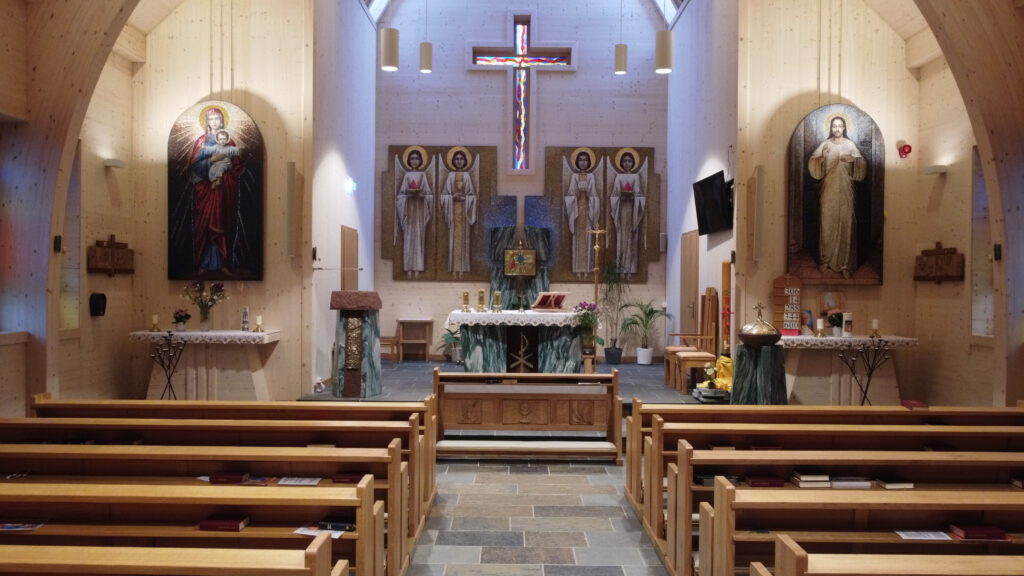
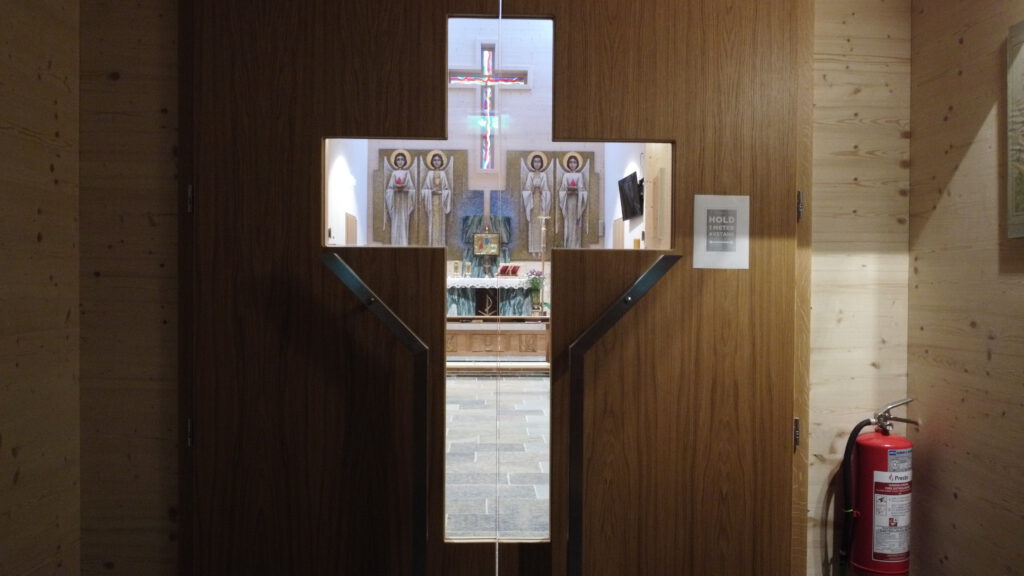
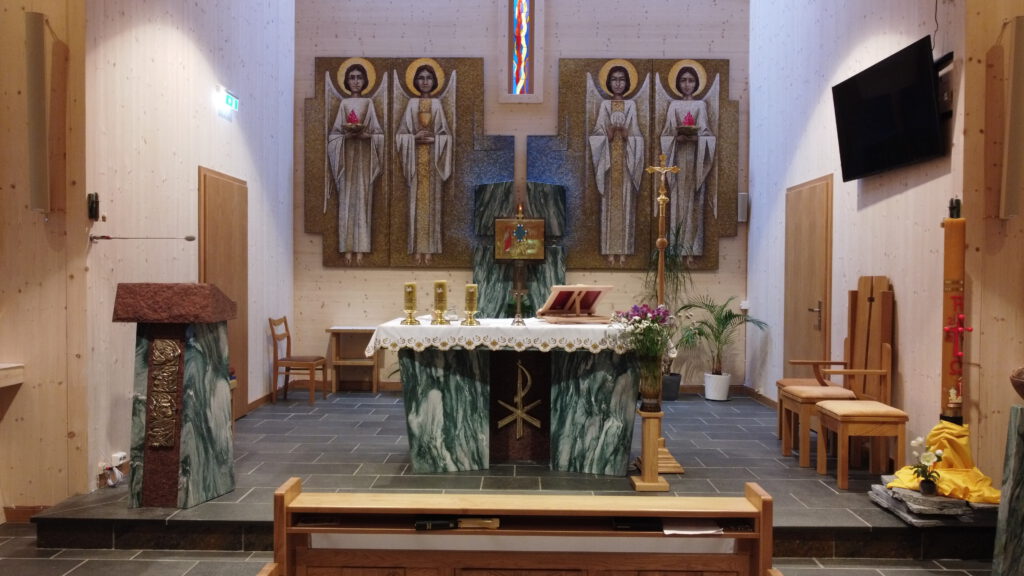
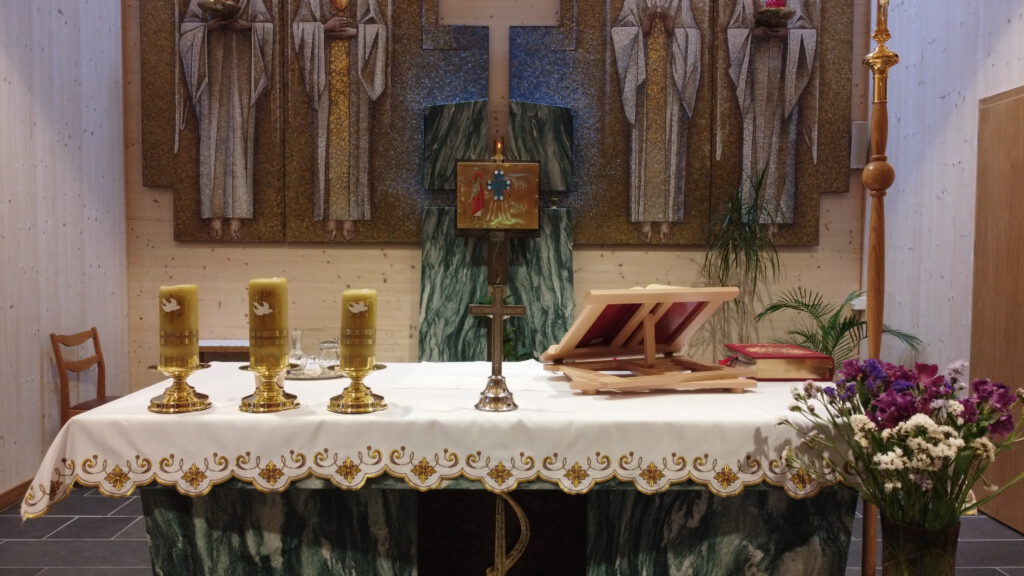
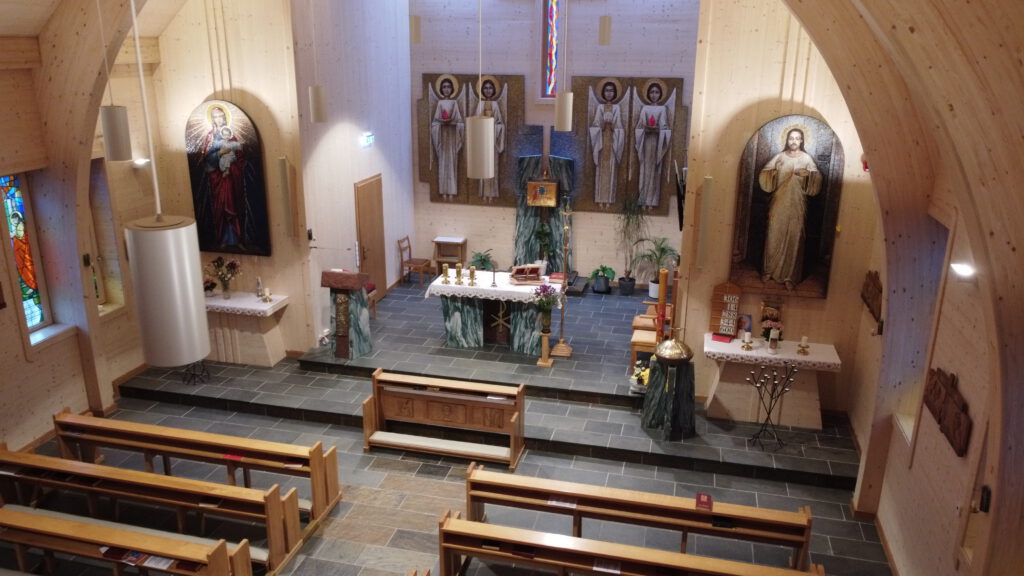
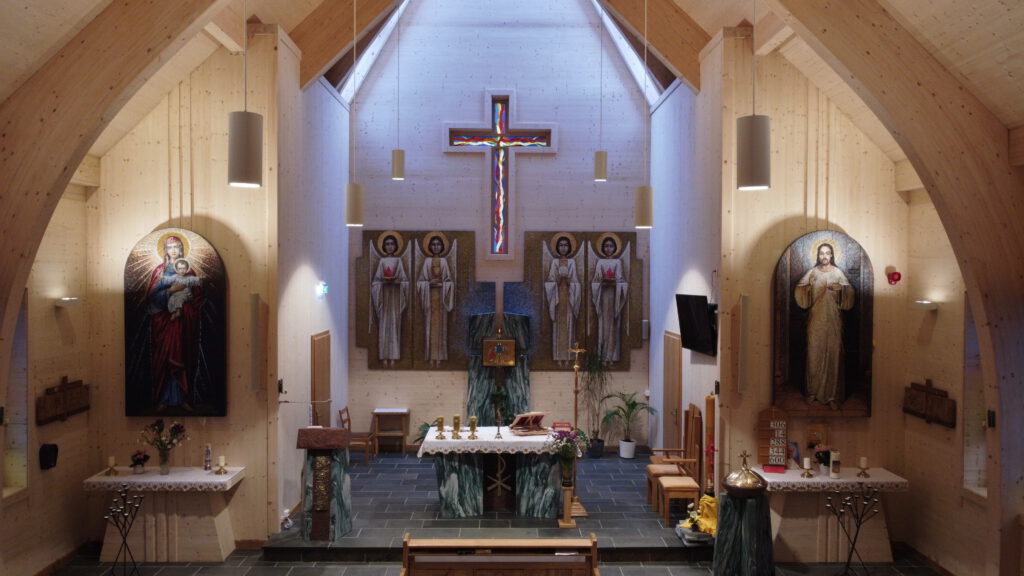
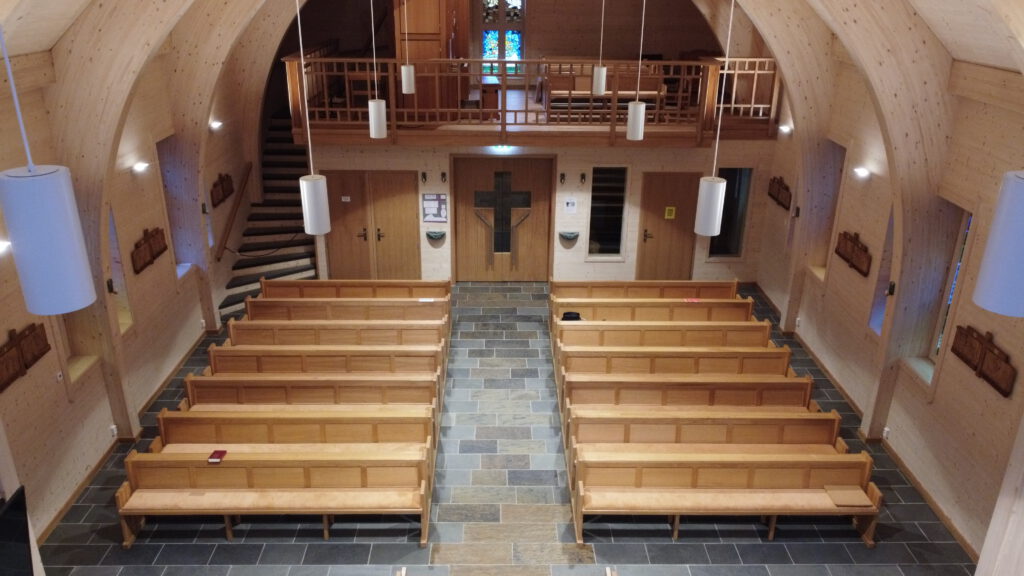
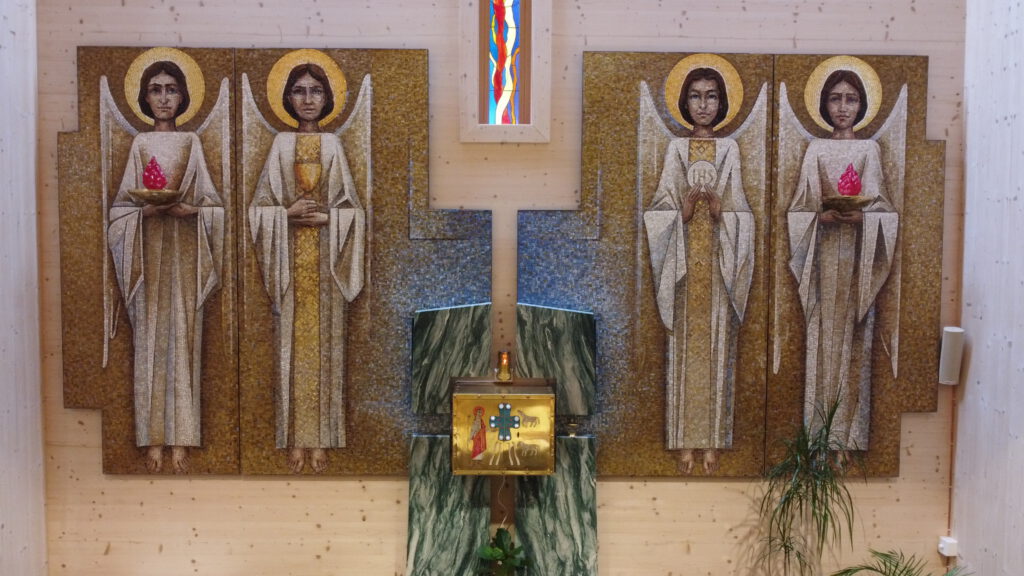
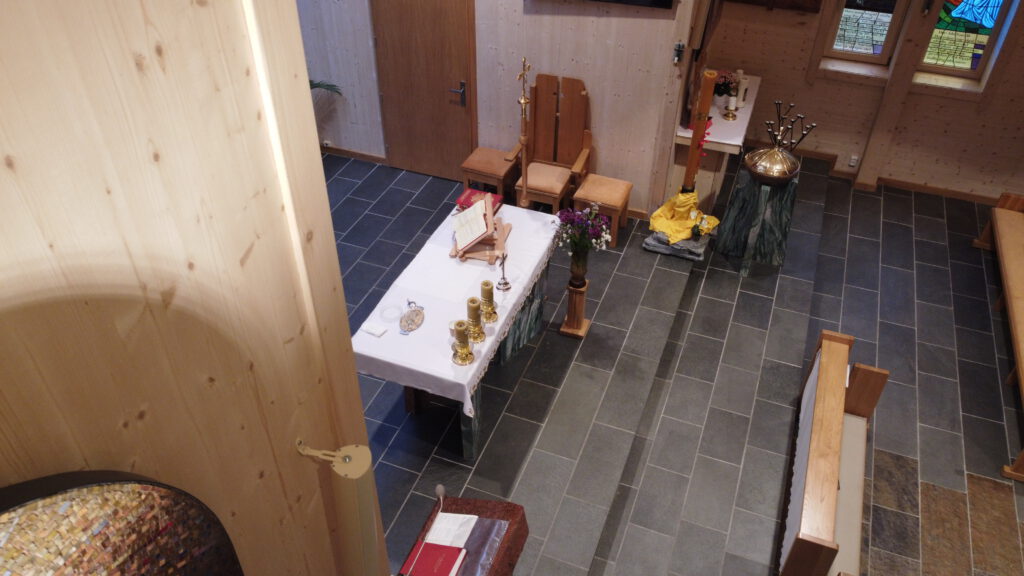
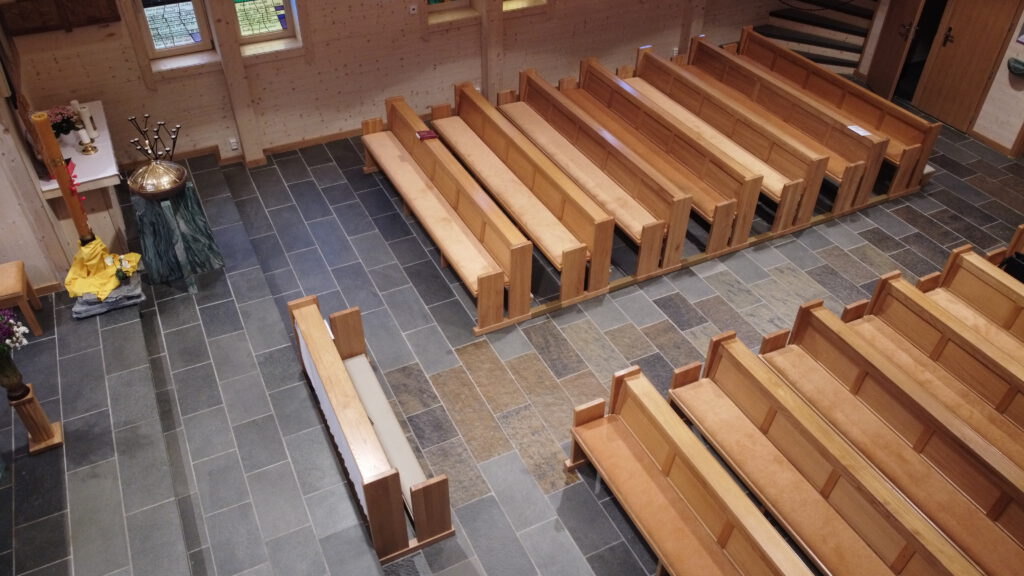
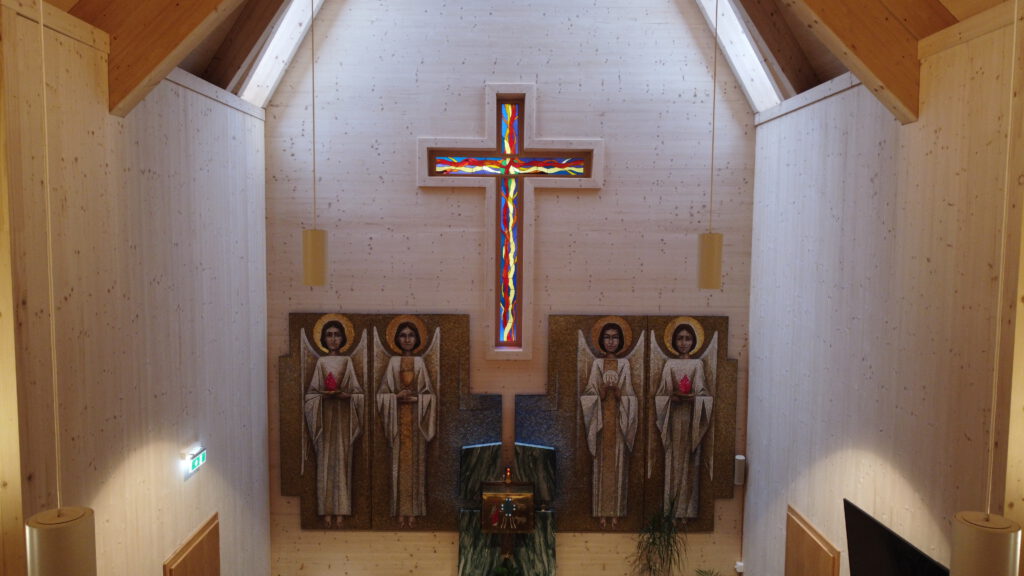
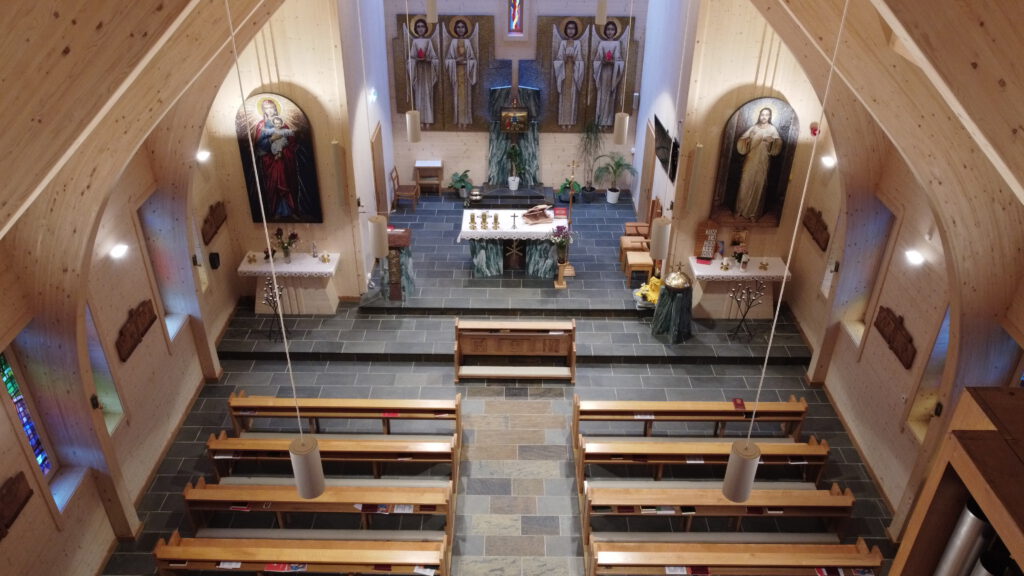
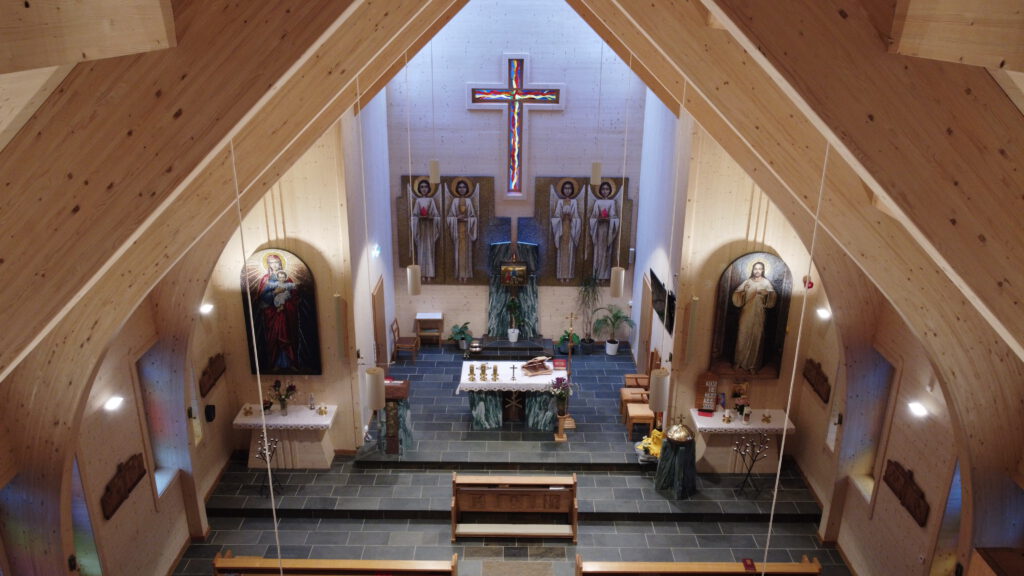
On 22 June 2019, St. Joseph's Church in Alta was finally consecrated — after 120 years, Alta once again had a Catholic church. The church is built entirely of wood as a passive house using natural materials. It features local Alta slate, oak interior, and a copper roof. Stained glass windows tell the story of Saint Joseph's life.
Builders and Artists
Shell construction:
Erich Bundschuh GmbH + 6 volunteers from Renovabis
Interior:
Stained glass - Jacek Białoskórski, Kraków
Mosaics - Ars Antiqua / Janusz Sobczyk, Warszawa
Way of the Cross - Zygfryd Gross, Leśnica
Altar, baptismal font, pulpit - Marek Sobociński, Moss / Steinhuggeriet in Steinkjer
Thousands of work hours - voluntary effort by Polish construction workers from Alta
The Mission Beyond the Arctic Circle
In December 1855, the Praefectura Apostolica Poli Arctici was established, commonly known as the Nordpolmisjonen (North Pole Mission). Its task was to carry out Catholic missions in the regions beyond the Arctic Circle in the northern parts of Norway and Sweden, on Iceland, Greenland, the Faroe Islands, Shetland, Orkney, the Kola Peninsula, in Caithness in Scotland, and in the Arctic part of North America, from Baffin Bay to Melville Island. The first prefect of the mission, from 1855 to 1861, was Paul Marie Etienne de Djunkovskij, who came from Russia.
Alta was chosen as the base for the mission — a town located in the western part of Finnmark county. (Alta is today also the name of the municipality, of which the town is the centre.) In 1856, a chapel and a school for boys were established here at the Altagård farm, which operated for over 20 years.
In 1869, the Vatican dissolved the North Pole Mission, concluding that the Church in this area should be organised differently.
The last Catholic missionaries in Alta concluded their work in 1898 and moved to other regions. Contributing factors included illness, epidemics, poverty, and famine among the local population, many of whom were forced to emigrate to North America. The priests had to close Altagården, which housed a school for children and youth and served as a base for their activities in the northernmost part of Norway. However, the churches founded during the 14 years of the mission's existence (among them Tromsø in 1859), together with active evangelisation work, bore fruit and ensured that Catholicism continued to develop in this part of Norway. In 1880, the Elisabeth Sisters arrived in Hammerfest, 140 km from Alta, and began their service in Northern Norway.
In the Far North, by the Alta Fjord...
The Church
by the Alta Fjord
Alta has grown to become the largest town in Finnmark, with over 20,000 inhabitants today. As the population grew, so did the number of Catholics. The Diocese of Tromsø decided to build a church on a site next to the church property. The location is close to the airport, east of Alta's new town centre.
In the year 2000, the Church purchased a residential building located next to the cemetery. The chapel was furnished, and the parish priest at the time, Fr. Wojciech Egiert — now chaplain — cleared and fenced the area of the church property.
The Diocese also took over the neighbouring property next to the church, which will provide sufficient space for the parish hall. The building requires renovation, which will be carried out in due time. It is encouraging that these conditions provide the opportunity to create what will likely become the most important Catholic centre in Western Finnmark.
The church was designed by the Polish architect Paweł Władysław Kowalski, and the architectural firm Haldde arkitekter AS from Alta oversees the realisation of the project.
Bishop Berislav Grgić blessed the new church site on 25 June 2017. Chaplain Fr. Wojciech Egiert, two Elisabeth Sisters from Hammerfest, and members of the faithful from the Alta area also took part in this ceremony.
Our New Church